How a foldable scanner validated demand for a category most hardware makers ignore

Crowdfunding numbers alone rarely tell a meaningful story. What matters is whether strangers—people with no brand loyalty and plenty of alternatives—are willing to pay for a product before it ships. By that measure, the ScanPad 100 Pro’s Kickstarter campaign delivered a clear signal: **1,073 backers pledged HK871,385∗∗,reaching∗∗11,205 7,777 . For a scanner—a mature, unglamorous product category dominated by established players—that result deserves a closer look.
The project ran from November 4 to December 4, 2025, offering Super Early Bird pricing at $89 for a single unit** and **$175 for two . By the time it closed, the campaign had drawn over a thousand paying customers and raised the equivalent of roughly $112,000 USD . Shipping was estimated for December 2025, with free delivery to the US, UK, Canada, EU, Australia, and Japan .
These figures are not record-breaking by Kickstarter standards. But they are notable for a hardware product in a category where most consumers either own a flatbed scanner they rarely use or have settled for phone-based scanning apps.
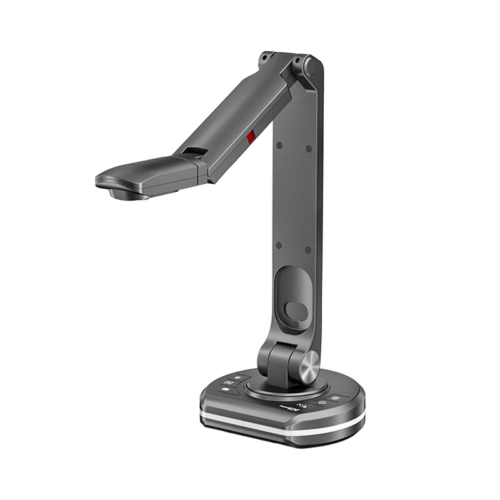
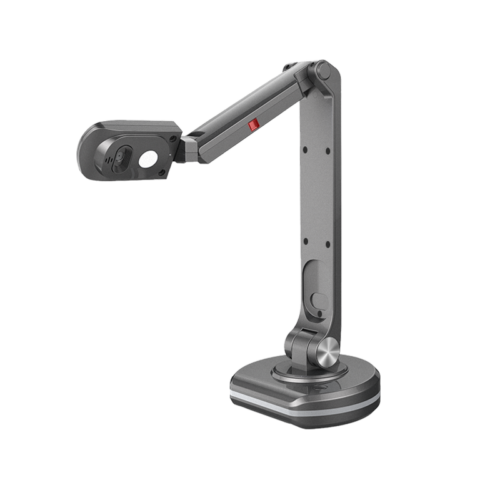
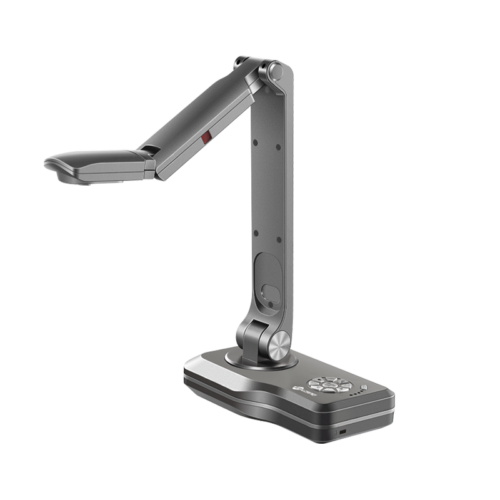
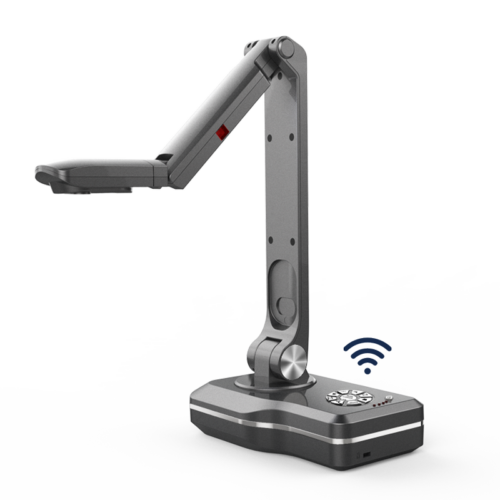
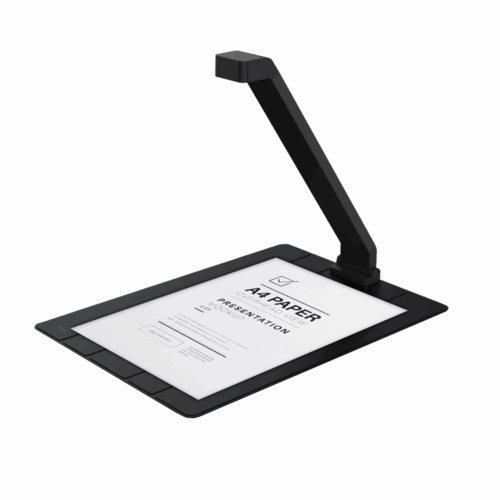
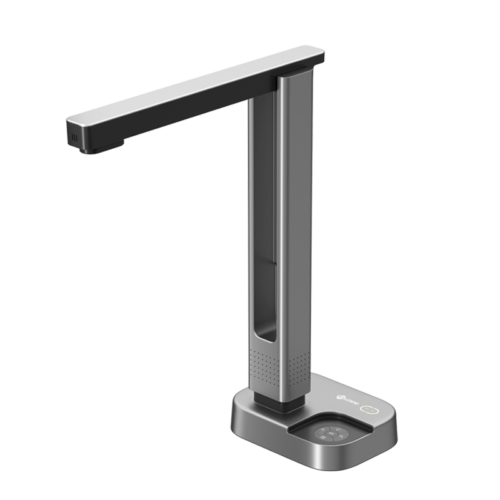
The ScanPad 100 Pro folds down to 355 × 68 × 51 mm and 690 grams—roughly the footprint of a folded umbrella—and unfolds into a fixed top-down capture station for A4 documents . The camera points straight down, so users lay a page flat and scan without adjusting angles or chasing shadows.
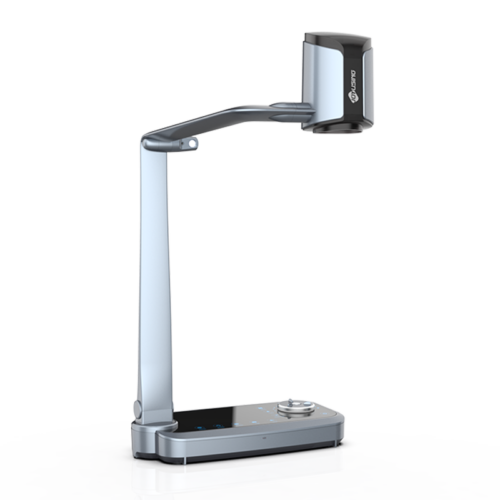
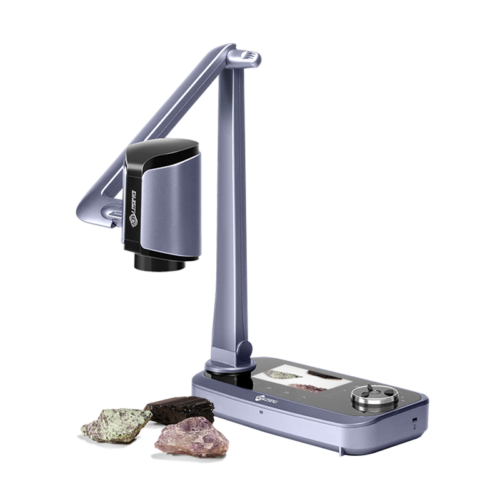
The specifications are competitive for the price: a 16MP sensor, up to 380 DPI, roughly 1 second per scan, OCR support, AI enhancement for edge detection and distortion correction, and USB-C connectivity across Windows, macOS, and Linux . It also functions as a 4K visualizer for live document projection .
But the specification sheet is not what drove backers. What matters is the trade-off the product makes. It does not attempt to replace a high-volume flatbed for bulk archival work. It does not attempt to replace a phone for the occasional receipt. It targets the gap between those two: people who regularly handle multi-page documents but do not want a scanner permanently occupying desk space.
A hands-on review from King of Computer Media put the positioning plainly: “If you only scan one or two documents a day, your phone’s built-in scanning feature is already sufficient. The ScanPad 100 Pro is better suited for students, graduate students, business professionals, insurance agents, and office workers who frequently handle multi-page documents” .
The campaign’s success suggests three things about the market that conventional hardware makers tend to overlook.
First, “portable” is not a niche feature—it is a workflow requirement. A Japanese review noted that leaving the ScanPad unfolded on a desk corner changed behavior: documents that would otherwise pile up get scanned because the tool is already there, already ready . The product’s value is not just portability but reduced friction between intention and action.
Second, the scanner category has been underserved at the low end. Between phone apps (free but inconsistent) and professional document scanners (capable but expensive and bulky), there is a wide gap for a device that costs under $100 during early bird and handles A4 documents reliably .
Third, Kickstarter backers are willing to fund hardware that makes a specific, narrow promise well. The ScanPad 100 Pro does not claim to do everything. It claims to fold flat, scan A4 pages quickly, and fit in a bag. The campaign’s 11,205% funding rate suggests that specificity resonated .
The campaign was not without practical limitations. OCR is primarily optimized for Windows; Mac support for text recognition is limited . The device is not recommended for books or highly glossy paper . And as with any crowdfunded hardware, backers accepted the usual risk that shipping timelines could slip—though Joyusing’s subsequent delivery updates and the product’s appearance in retail channels suggest the campaign ultimately fulfilled its promises .
The ScanPad 100 Pro’s Kickstarter result is not proof that a new hardware giant has arrived. It is proof that a well-defined product addressing a specific, persistent friction point—paper documents in a digital workflow, without dedicating permanent desk real estate—can find over a thousand paying customers before a single unit ships.
For a company like Joyusing, which built its reputation on document cameras and book scanners for institutional buyers, the campaign also served as a direct-to-consumer validation exercise. The backers were not procurement officers or AV integrators. They were individuals who saw a problem and decided the ScanPad was worth betting on. That is a different kind of market signal—and for a product category as unglamorous as scanning, it is a meaningful one.

United States (English)

France (French)

Portugal (Portuguese)

Spain (Spanish)
No.20 Building, Haixi Innovation Science Park, Wulongjiang Central Avenue, High-tech District, Fuzhou, Fujian 350108, China.