A crowdfunded document camera, a basement full of forgotten history, and the quiet revolution happening one scanned page at a time
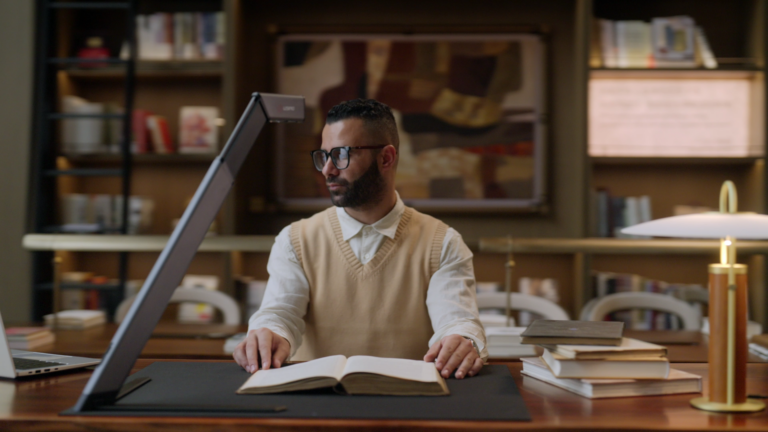
Walk into the Riverton Heritage Library on a Tuesday morning and you'll see the usual scene: a few patrons at the computers, a stack of returns waiting to be shelved, sunlight falling across the reading room. What you won't see is what's happening in the back office—where a librarian named Margaret is carefully lifting a 140-year-old ledger onto a scanning table, watching its yellowed pages appear on a monitor in crisp, high-resolution detail.
That ledger is about to become training data. And the machine making it happen is the ScanMax320 Document & Book Scanner.
Riverton's basement holds the kind of collection most small libraries inherit and then quietly ignore: leather-bound town records from the 1880s, brittle newspaper archives, hand-annotated reference volumes, boxes of local historical material that no one has touched in decades. The pages are too fragile for a photocopier. The bindings are too tight for a flatbed scanner. And the budget for professional digitization? Nonexistent.
For years, the answer was simple: leave it alone. Preserve it by not touching it. But preservation without access isn't preservation—it's just storage.
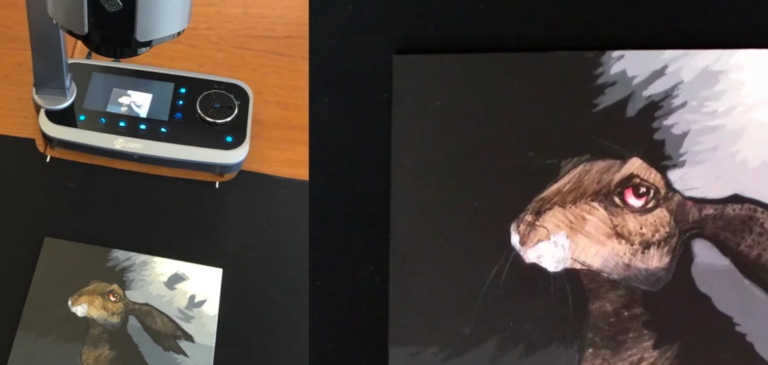
The ScanMax320 changed the equation. Its high-resolution lens captures fine print and faded ink without forcing bindings open. Its OCR engine turns scanned pages into clean, searchable text. And its fast capture speed means a volunteer can work through a hundred pages in an afternoon without damaging a single spine.
The library acquired it through a crowdfunding campaign—supporters from the community and beyond chipped in because they believed these materials deserved a future. What they got was a machine that turns fragile paper into durable data.
Here's the part that excites the librarians most. Those scanned pages aren't just being archived—they're being prepared as training data for AI models. Historical language, period-specific terminology, the idiosyncrasies of 19th-century handwriting and print: all of it becomes material that machine learning systems can learn from. The kind of authentic, context-rich text that modern datasets lack.
A town clerk's 1887 ledger entry, once readable only by a historian with gloved hands, is now part of the knowledge base that will train the next generation of AI. History isn't just being preserved. It's being put to work.
Around the scanner, the work continues with the quiet tools of the trade: archival gloves and book cradles to protect fragile volumes, color-calibration cards so scanned maps keep their original tones, external drives for secure backups, and a steady supply of coffee for the volunteers who show up week after week.
Riverton Heritage Library is still a quiet place. But in the back office, something has shifted. The basement isn't a dead end anymore—it's a source. And Margaret, gloves on, ledger open, monitor glowing, is the first person in a century to read these pages and know that someone—or something—will read them next.
Funded by crowdfunding supporters — because every page of history deserves a second life, and every library deserves a way to share it.


United States (English)

France (French)

Portugal (Portuguese)

Spain (Spanish)
No.20 Building, Haixi Innovation Science Park, Wulongjiang Central Avenue, High-tech District, Fuzhou, Fujian 350108, China.