584 backers, $219,748 pledged, and a funding rate north of 14,000%—Joyusing’s A2 portable scanner proves the ScanPad 100’s success was not a fluke
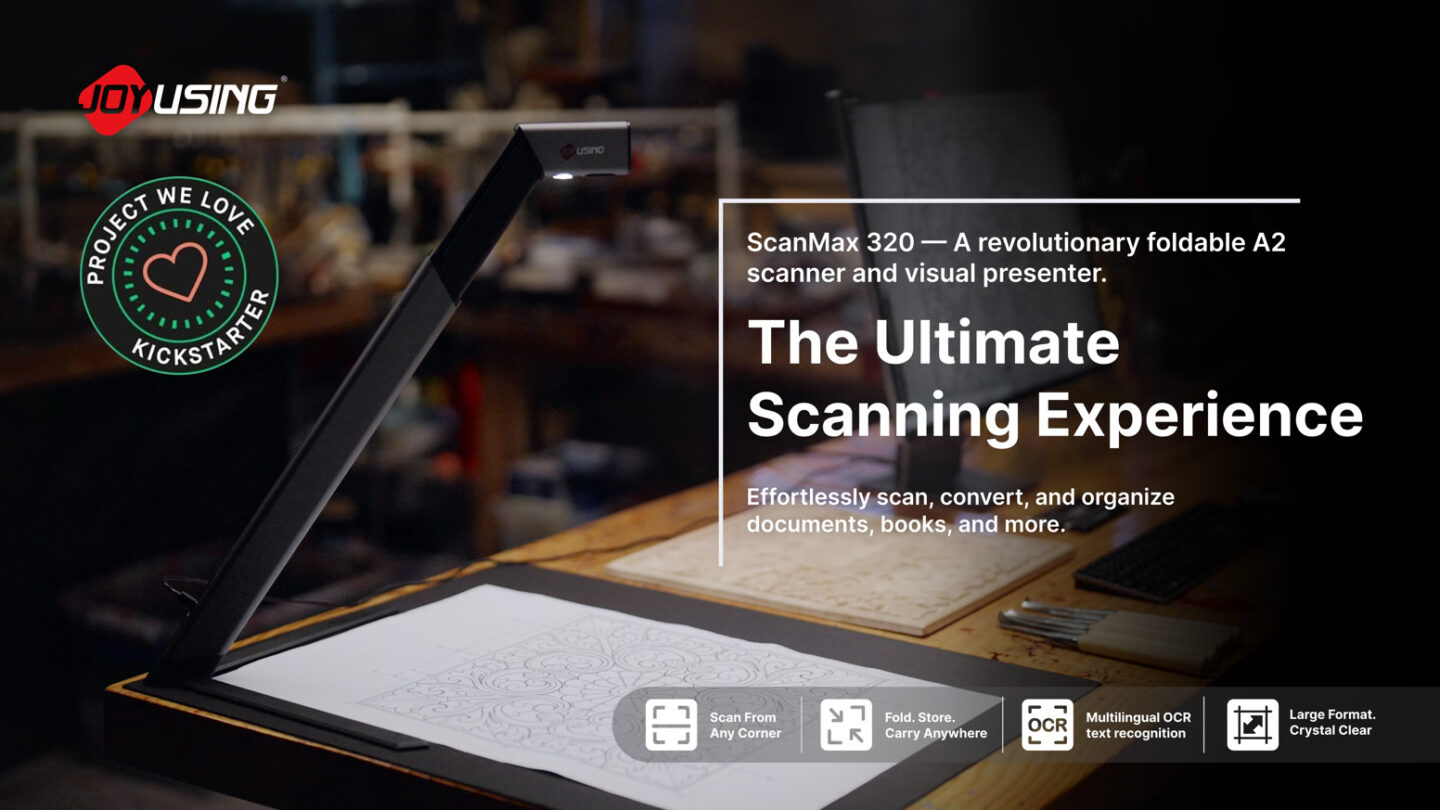
Successful hardware projects on crowdfunding platforms usually share one trait: they solve for "better," not "different." A faster processor, a larger sensor, a longer battery life. But the 584 backers of the ScanMax 320 voted with $219,748 in pledges for a slightly different answer—they weren't buying a more powerful scanner. They were buying a scanner that sits in the right place.
The campaign's goal was $1,528. It closed with more than $219,000. That ratio doesn't explain much on its own. The more interesting question is why a team that had already succeeded with the ScanPad 100 Pro chose a more expensive, more niche product for its second campaign—and why hundreds of people still paid before seeing a single unit.
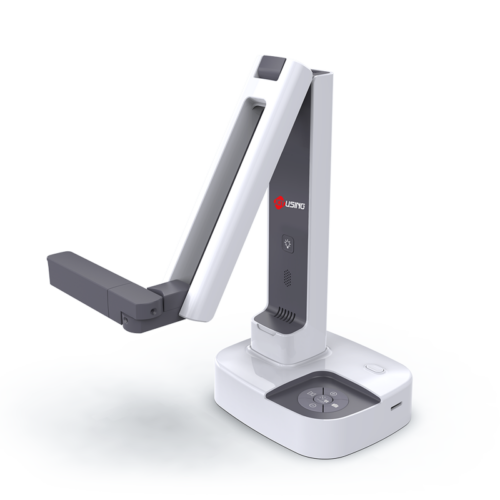
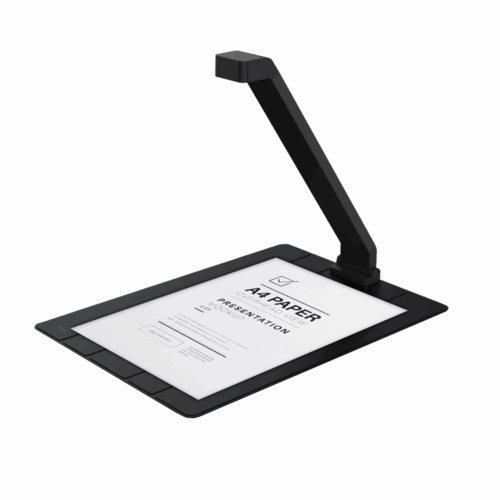
One detail from ScanPad 100 Pro reviews comes up repeatedly, and it barely sounds like a product feature. A Japanese reviewer using the foldable ScanPad noticed a behavioral shift: because the device could stay unfolded at the edge of the desk, scanning happened more often. "When documents are within reach, you feel like scanning them. Digitizing paperwork is the number one task people want to do but can't get around to—and being able to leave the scanner out is exactly the advantage."
That observation became the design brief for the ScanMax 320. The problem wasn't that people lacked a scanner. The problem was that scanners, by their nature, demand to be put away. A flatbed occupies the center of the desk or gets buried in a closet. An overhead scanner with a permanent arm claims a fixed footprint. Either way, the friction of setup discourages use—and a scanner that isn't used isn't solving anything.
Joyusing's project lead later said the ScanMax 320 "was built from real user feedback across 17 design iterations." The feedback from campaign one wasn't about resolution or speed. It was about where a scanner should live, and what it should be able to do once it's there.
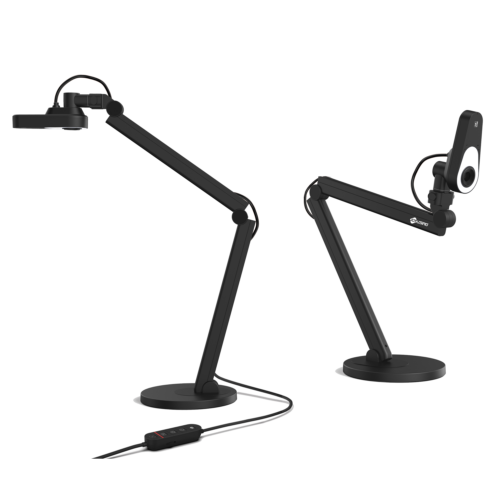
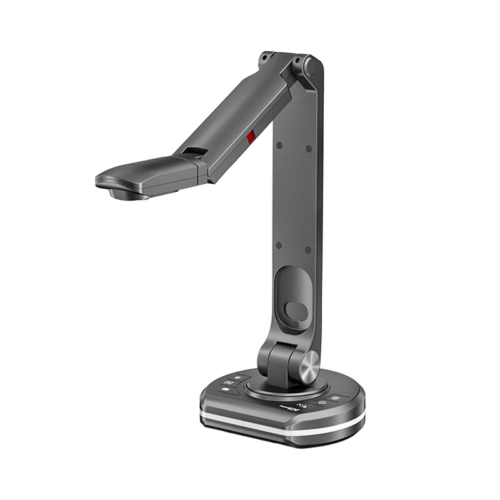
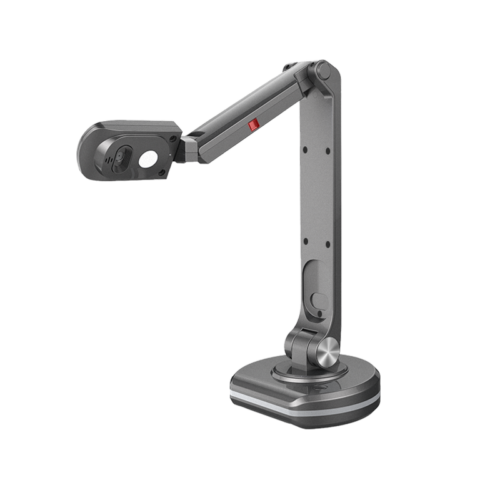
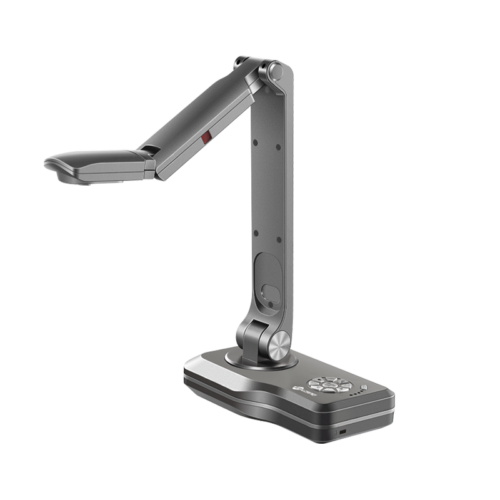
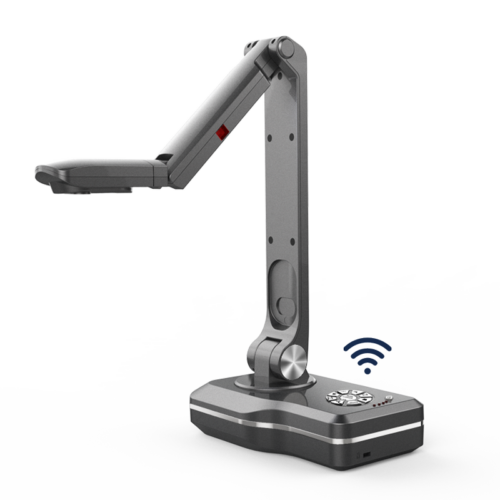
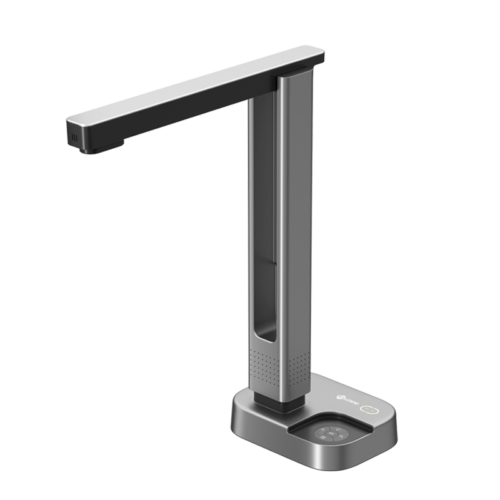
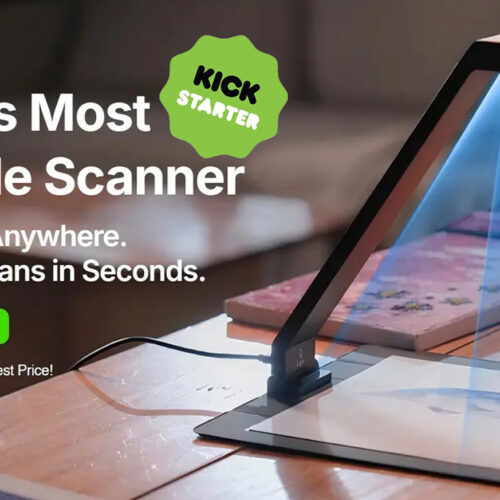
The ScanMax 320 makes two promises that seem to conflict. It captures materials up to A2 size (594 × 420 mm)—blueprints, double-page book spreads, oversized technical drawings, large artwork. And it asks for almost no permanent desk space.
The resolution of that tension is the product's defining feature. Folded, the device measures 355 × 68 × 51 mm, slim enough to slip into the included carrying bag. Unfolded, it doesn't occupy the center of the workspace. It sits at the corner of a desk, its arm reaching over the capture area while leaving the work surface largely free. Joyusing claims this "edge-of-desk" design unlocks up to 80% more usable workspace compared to traditional flatbed or overhead scanners.
Yanko Design's review captured the logic precisely: the ScanMax 320 "isn't asking you to clear space or rearrange anything. It folds, parks at the edge, and gets on with the job. Whether you're archiving a collection, digitizing a sketchbook, or presenting something in a meeting, the fact that it stays in its corner is, in itself, the point."
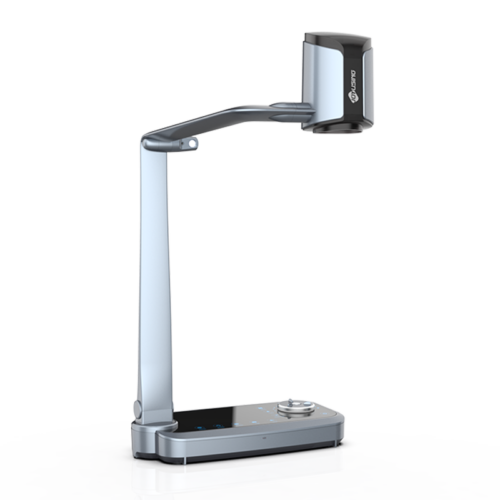
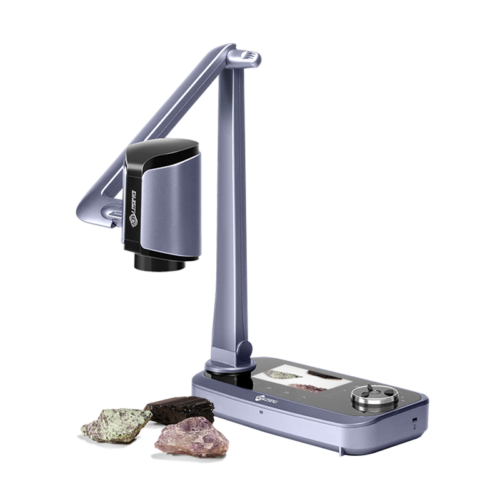
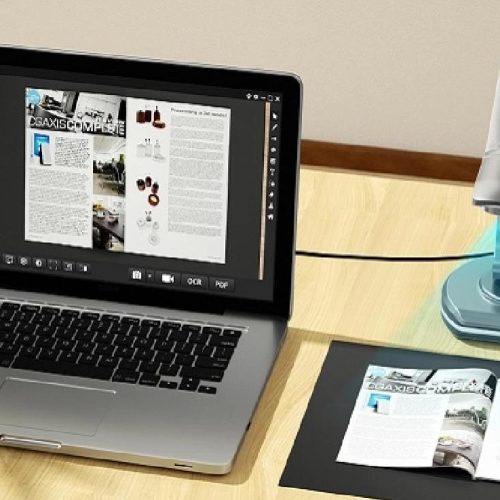
At the center of the system is a 32-megapixel sensor capturing at up to 380 DPI, with engineered optical lenses and a rectangular LED illumination system shaped to match the scanning area, reducing the shadow problems common to overhead scanners. AI-powered size detection automatically switches between A2 and A3 modes. The software handles auto-flattening, finger removal, de-skewing, and shadow removal for bound materials, with OCR support for 180 languages and export to Word, PDF, and TXT.
For a professional who needs A2 capture occasionally—an architect reviewing blueprints, a librarian digitizing a fragile spread, a designer archiving oversized sketches—the ScanMax 320 offers something a flatbed cannot: capability without permanent occupation.
The ScanMax 320's backer profile differs from the ScanPad 100 Pro's. Fewer people paid more. The ScanPad was an entry-level tool priced at $89 for early backers. The ScanMax 320 carries an MSRP of **$649**, with early Kickstarter pricing starting at $349. A narrower, more professional audience explains why backer count fell while total funding rose.
BackerClub's assessment noted that Joyusing "has two Kickstarter projects to their name and more than a decade building document imaging hardware," running its own production lines and holding multiple international certifications, including a Red Dot Award on a previous product. Kickstarter tagged the ScanMax 320 as a "Project We Love." That track record matters in a category where backers are asked to trust a company months before delivery. The ScanPad's fulfillment history gave the second campaign a credibility baseline that first-time creators lack.
There is also a consistency in product philosophy across both campaigns. The ScanPad 100 Pro solved "A4 documents without desk commitment." The ScanMax 320 solves "A2 documents without desk commitment." The variable changed. The principle did not.
The campaign was not without limitations worth noting. macOS support is explicitly described as partial, with some features limited compared to Windows. The software's OCR language count has been reported inconsistently—the product page says 180 languages, while the campaign FAQ reportedly listed 38. And as with any overhead scanner, capturing A2 material still requires a surface large enough to lay the document flat; the folding design saves storage space, not working space during use.
The ScanMax 320's Kickstarter result does not prove that Joyusing will dominate the scanner market. It does demonstrate something more specific: a hardware company can return to crowdfunding a second time, with a more expensive and more niche product, and still find hundreds of paying customers before shipping—because the first campaign taught it something real about how people scan, and the second product was built to act on that lesson.
For a category as unglamorous as document scanning, that is a meaningful signal. Not just about one product, but about whether listening to backers and iterating on their feedback has repeatable value.

United States (English)

France (French)

Portugal (Portuguese)

Spain (Spanish)
No.20 Building, Haixi Innovation Science Park, Wulongjiang Central Avenue, High-tech District, Fuzhou, Fujian 350108, China.